
Before electricity reaches consumers, it is often bought and sold at the wholesale level in energy markets. Energy markets are where electricity is bought and sold for use in homes, schools, and businesses. These markets focus on the energy that will be produced and consumed in the next few hours or the next day. In many parts of the country, power plants sell electricity to utilities and others directly in energy markets administered by non-profit Regional Transmission Organizations (RTOs) or Independent System Operators (ISOs).
Energy markets pay for the megawatt-hours of energy produced. Capacity markets pay for the ability to produce energy. Ancillary services markets support grid stability and reliability.
Although each region uses slightly different rules and names, most RTOs and ISOs run two linked markets for energy:
Day-Ahead Market: An RTO/ISO develops a forecast for the energy need for the day ahead, based on its experience. Power plant owners and other resources offer to produce electricity for each hour of the next day. The RTO/ISO chooses the lowest-cost mix of resources that can meet expected demand. These results become a financial commitment for the operating day.
Real-Time Market: Conditions often change because demand can go up or down, including variations in intermittent energy output, equipment malfunctions, or weather shifts. Every few minutes, RTOs and ISOs update plans and dispatch resources to meet actual demand. The real-time market settles differences between current usage and the day-ahead schedule.
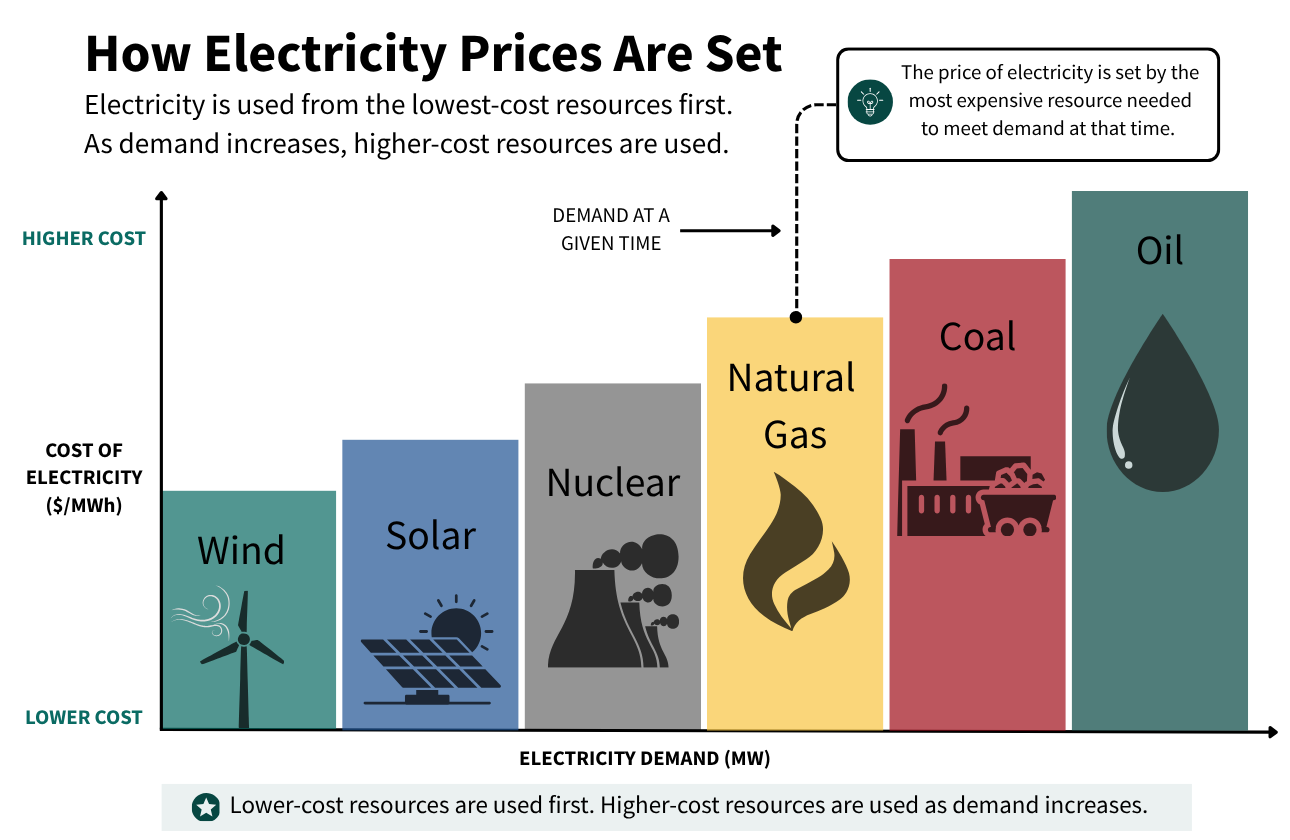
Energy markets use economic dispatch, which means resources are selected from lowest cost to highest cost. This method is sometimes referred to as a single price clearing market.
The price at each location on the grid is called the Locational Marginal Price (LMP). LMP reflects three things:
- the cost to produce the next unit of energy;
- energy lost as electricity moves across power lines; and
- transmission congestion, when some lines are too full to carry more electricity.
There are different types of LMPs. Some regions use nodal pricing (many local prices), while others use zonal pricing (one price for a larger area), but the idea is the same - prices should reflect real grid conditions.
Energy markets make sure that supply always meets demand while helping to find the lowest-cost electricity available. By sending price signals about where new resources and transmission may be needed, the market allows a fair way for all kinds of resources to compete, including: power plants, storage providers, and demand response programs. These markets support reliability by giving operators the tools they need to respond to fast-changing conditions.
Even though RTOs and ISOs use similar pricing signals and energy market types, the various rules, timing, and names can differ. For example, the time blocks used for making energy offers in a market might be one-hour, fifteen minutes, or five minutes depending on the specific market and RTO/ISO.
Energy markets depend on various participants to ensure enough electricity is produced in real-time. These include:
Grid operators: oversee the system to maintain stability and reliability.
Power generators or marketers: produce or sell electricity to meet demand.
Utilities and load-serving entities (LSEs): deliver electricity to consumers through high-voltage transmission lines.
Demand response participants: reduce electricity usage during high-demand periods.
Energy efficiency providers: reduce electricity usage regularly, all the time or at key times.
Energy storage providers: store electricity during off-peak periods and deliver it during times of greater need when prices are higher.
Each group plays a vital role in keeping the power grid reliable and stable.
FERC regulates RTOs/ISOs via electricity market proceedings. FERC proceedings affecting RTOs/ISOs may be started for several reasons, including when: (i) there is a proposed change to the RTO/ISO market rules; (ii) there is a proposed change to FERC regulations that may impact markets in one or more RTO/ISO territories, or (iii) there is a complaint about unjust or unreasonable rates. All of these proceedings provide opportunities for public input.