In the United States, reliable operation is governed by a federal framework established under Section 215 of the Federal Power Act (FPA). This law assigns oversight responsibility to the Federal Energy Regulatory Commission (FERC). FERC has taken action to ensure that the electric grid is prepared to reliably operate during extreme events. Standards development and implementation is maintained by an independent, non-profit organization called the North American Electric Reliability Corporation (NERC) along with several regional entities who are collectively known as the Electric Reliability Organization (ERO) Enterprise.
FERC: Federal Oversight Authorities
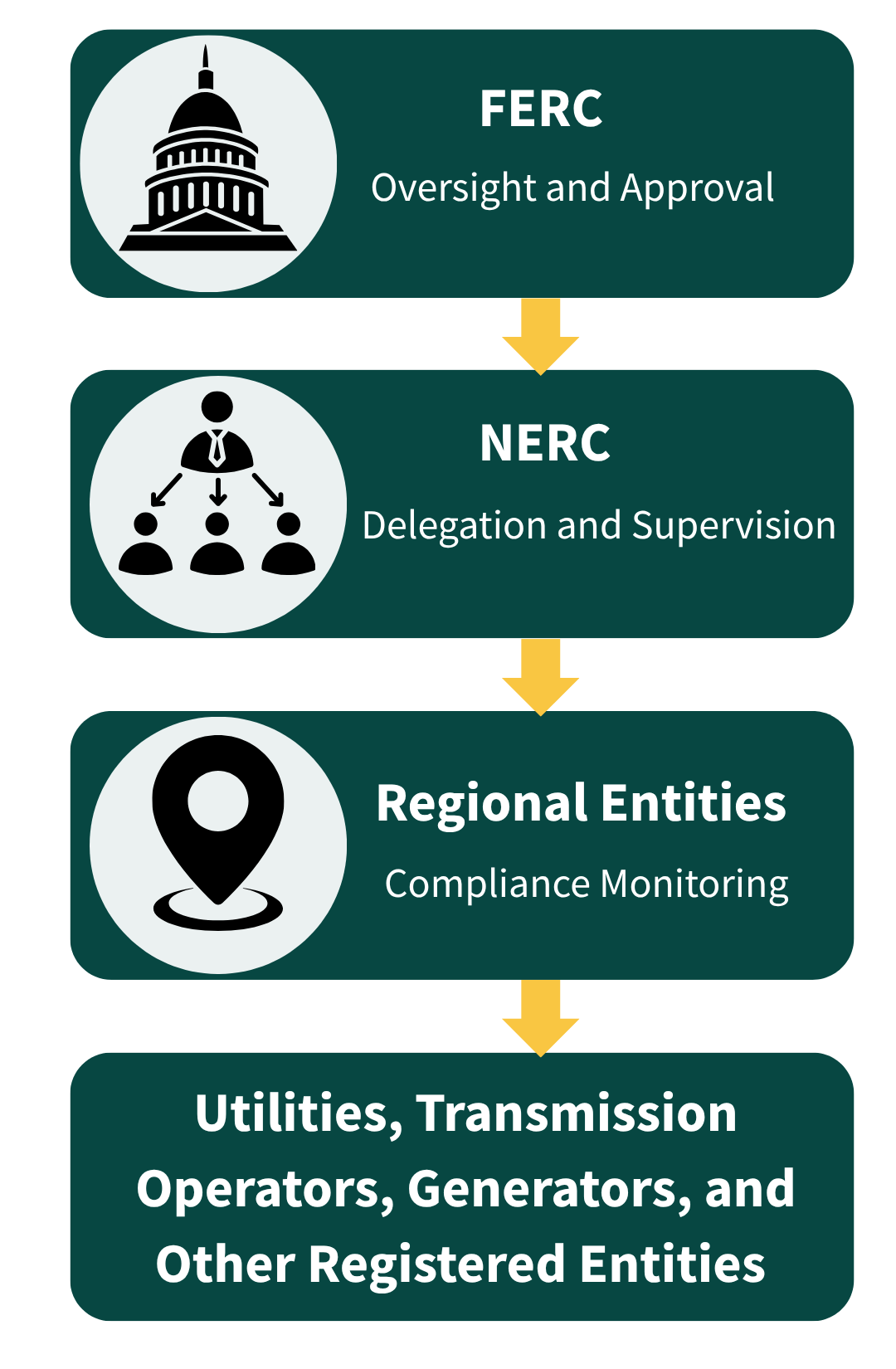
FERC is an independent federal agency responsible for regulating interstate transmission of electricity and ensuring the reliability of the Bulk Power System. FERC certifies and oversees NERC, which develops reliability standards through an open, stakeholder-driven process. FERC may approve or direct modifications to proposed reliability standards to ensure they are just, reasonable, not unduly discriminatory, and in the public interest. Once approved, reliability standards become mandatory and enforceable across registered electric transmission system users, owners, and operators. FERC also oversees the compliance and enforcement program carried out by NERC and the ERO Enterprise, including review of significant violations, imposed penalties, and mitigation activities.
NERC: The Electric Reliability Organization (ERO)
Since being certified as the nation’s ERO, NERC has continued to operate across the United States, Canada, and a portion of Mexico, reflecting the interconnected nature of the North American grid. In addition to developing reliability standards, NERC monitors and assesses the Bulk Power System’s reliability, conducting compliance audits and investigations, enforcing reliability standards (subject to FERC oversight), and issuing reliability assessments and risk reports.
The ERO Enterprise
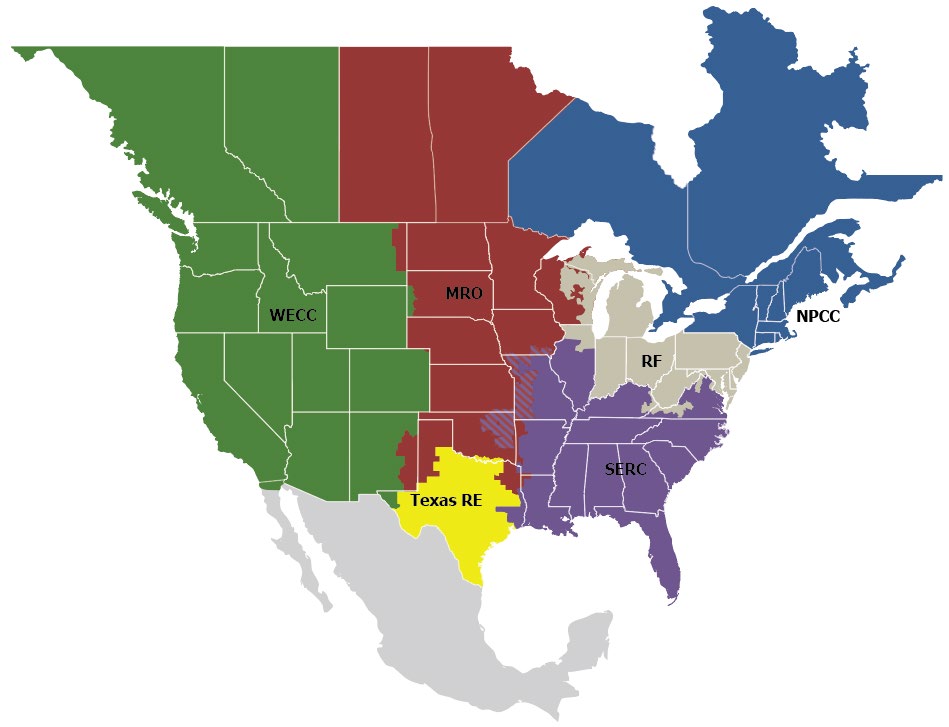
The ERO Enterprise refers collectively to NERC and six Regional Entities, named the Midwest Reliability Organization, Northeast Power Coordinating Council, the Western Electricity Coordinating Council, ReliabilityFirst Corporation, SERC Reliability Corporation, and Texas Reliability Entity. These Regional Entities conduct audits and spot checks as well as investigations into system disturbances within their geographic regions, subject to NERC oversight and FERC review to ensure industry expertise as well as a Bulk Power System that is well operated and maintained.
The structure can be summarized as follows:
NERC Reliability Standards
NERC develops mandatory reliability standards that apply to users, owners, and operators of the electric transmission system. These standards fall into several categories including operations, planning and resource adequacy, transmission system performance, protection and control systems, emergency preparedness, physical security, and cybersecurity. The standards are then submitted to FERC for approval. Once approved by FERC, these standards become legally enforceable.
Enforcement Process
FERC has authority under Section 215(e) of the FPA to impose substantial monetary penalties for violations of approved reliability standards. For example, if a utility is not compliant with a security controls standard, the Regional Entity assesses risk and potential reliability impact. Then, NERC may impose a financial or non-financial penalty. NERC reviews the determination before the matter is submitted to FERC for final review. FERC may approve the penalty, remand the decision for further review, modify the penalty, or initiate its own enforcement action. This process of review and affirmation of Notices of Penalty provides clear and transparent steps for industry and the public. Enforcement of reliability standards serves to ensure that electric energy companies and organizations follow important rules and practices.
Joint Inquiries and Reliability Reports
To assess major events and systemic risks, FERC conducts joint inquiries in collaboration with NERC and other federal agencies and publishes reports. These efforts analyze root causes of widespread disturbances such as winter storms, identify standards gaps or implementation issues, and recommend corrective actions. Sometimes they also analyze the actions that worked well. These reports are available to the public and presented at FERC’s open meetings for increased transparency. For more information, please visit www.ferc.gov.